Menu
Your Cart

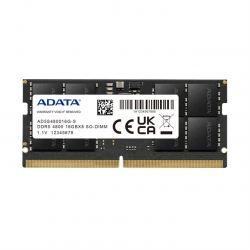
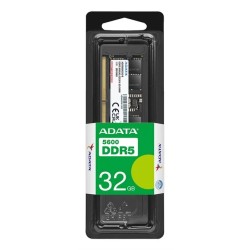
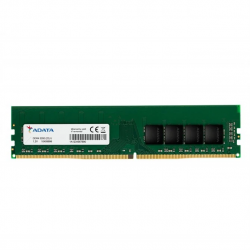
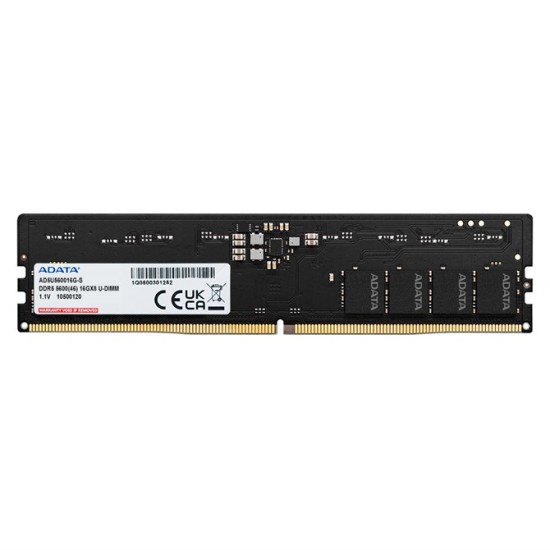
ADATA AD5U560016G-S Memory Module 16 GB 1 X 16 GB DDR5 5600 MHz

ADATA AD5U560016G-S Memory Module 16 GB 1 X 16 GB DDR5 5600 MHz
£0.00
Ex. VAT: £0.00
  • Stock: In Stock
  • Model: AD5U560016G-S

Higher Frequencies
The DDR5-5600 U-DIMM delivers blazing frequencies of up to 5600 MHz, a major leap from the max. frequency of DDR4 modules (3200 MHz).

More Energy-Efficient
This next-gen memory module operates on just 1.1V, making it 8% more power-efficient than DDR4. What's more, it features a built-in Power Management IC (PMIC) to enhanced power supply stability.

Capacity Doubled
This memory module's architecture allows for more memory bank groups and banks. With the same area, more bank groups can be packed into the module, doubling what was possible with DDR4, giving you higher capacities.

Improved Stability
With error correcting code (ECC) this module can correct errors automatically in real-time. In addition to greatly reducing the burden of CPU calculations, it also provides increased stability and reliability for enterprise-class computers.

QuikTips: DDR5 vs DDR4 - Appearance
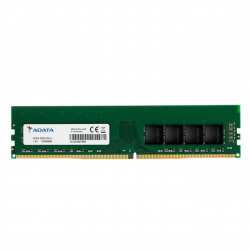
DDR5 U-DIMM modules have the same dimensions and pin count as DDR4 modules. The most obvious difference is the position of the fool-proof notch. Also, DDR5 integrates I/O resistors with CMD/ADD resistors. Also, the appearance of DDR5 modules are cleaner than DDR4. In addition, you can see a PMIC in the center.

QuikTips: DDR5 vs DDR4 - Chip Architecture
DDR5 modules provide two times more capacity than DDR4 by packing in more banks and bank groups. In addition, Burst Length, Prefetch are also doubled, increasing the number of data writes and the amount of data taken upfront. And to ensure data integrity, they feature error correcting code (ECC) technology.

QuikTips: DDR5 vs DDR4 - Performance
The biggest change is that bandwidth and frequency are significantly higher. The ADATA DDR5 memory modules deliver frequencies of up to 4800MHz and feature bandwidth of 38.4GB/s, which is 50% higher than the DDR4-3200. The maximum frequency is increased 1.63 times compared to DDR4.

Features
On-Die ECC
Indicates whether the device features integrated Error Correction Code (ECC) to detect and fix single-bit memory errors internally.
CAS latency
Column Address Strobe (CAS) latency, or CL, is the delay time between the moment a memory controller tells the memory module to access a particular memory column on a RAM module, and the moment the data from the given array location is available on the module's output pins. In general, the lower the CAS latency, the better.
46
Internal memory
A computer's memory which is directly accessible to the CPU.
16 GB
Memory layout (modules x size)
How the overall memory of the product is put together, defined by the number of modules and the size.
1 x 16 GB
Internal memory type
The type of internal memory such as RAM, GDDR5.
DDR5
Memory clock speed
The frequency at which the memory (e.g. RAM) runs.
5600 MHz
Component for
What this product is used as a part of (component for).
PC
Memory form factor
Design of the memory e.g. 240-pin DIMM, SO-DIMM.
288-pin DIMM
Buffered memory type
The architecture used to manage the data flow between the memory controller and the memory chips, such as Registered (buffered) or Load reduced.
Unregistered (unbuffered)
Memory voltage
The voltage (V) of the memory in the device.
1.1 V
Module configuration
The internal organization of the components, typically expressed as the density per bank multiplied by the width of the data bus (e.g., 1024M x 64).
2048M x 8


Delivery Options

All delivery information is based on shipping within the United Kingdom. For orders outside the UK please email us at info@jpcomputers.co.uk with specific details to allow us to quote for delivery and lead times


Shipping rates within the United Kingdom:-

• Orders under £425 exc. VAT - £2.99 plus VAT

• Orders over £425 exc. VAT - Delivery is free of charge.