Menu
Your Cart

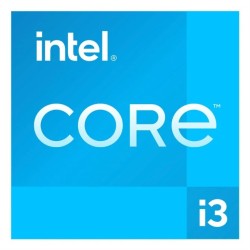
Intel Core Ultra 7 270K Plus processor 36 MB Smart Cache Box

Intel Core Ultra 7 270K Plus processor 36 MB Smart Cache Box
£0.00
Ex. VAT: £0.00
  • Stock: In Stock
  • Model: 99DC0Z
Processor
Processor manufacturer
The manufacturer that produced the processor.
Intel
Processor generation
The specific architectural version or series of the processor (e.g. 7th Gen).
Intel Core Ultra (Series 2)
Processor model
The model number for the processor in a computer.
270K Plus
Processor family
A family of processors is a group of processors produced by one company over a short period of time e.g. Intel Pentium processors.
Intel Core Ultra 7
Processor cores
The number of central processing units ('cores') in a processor. Some processors have 1 core, others have 2 (e.g. Intel Core Duo) or more (e.g. the Intel Xeon E7-2850 has 10 cores).
24
Processor socket
Mechanical component(s) that provides mechanical and electrical connections between a microprocessor and a printed circuit board (PCB). This allows the processor to be replaced without soldering.
LGA 1851 (Socket V1)
Processor threads
The number of virtual cores available for simultaneous processing tasks (e.g. 12 or 128).
24
Processor operating modes
Operating modes for the processors that place restrictions on the type and scope of operations for certain processes run by the CPU. This design allows the operating system to run with more privileges than application software.
64-bit
Performance cores
The number of high-performance cores designed to handle demanding tasks and heavy workloads.
8
Efficient cores
The number of high-efficiency processor cores designed to handle background tasks and power-saving operations.
16
Processor boost frequency
The turbo boost is an automatic, managed accelleration of the processor when one of the cores is overloaded.
5.5 GHz
Performance-core boost frequency
The maximum clock speed reached by the high-performance cores of the processor, measured in GHz.
5.4 GHz
Performance-core base frequency
The guaranteed minimum clock speed of the high-performance processor cores, measured in megahertz (MHz) or gigahertz (GHz).
3.7 GHz
Efficient-core boost frequency
The maximum clock speed reached by the efficiency cores of the processor, measured in GHz.
4.7 GHz
Efficient-core base frequency
The minimum clock speed at which the efficiency cores of the processor operate, measured in megahertz (MHz) or gigahertz (GHz).
3.2 GHz
Processor cache
The amount of high-speed volatile memory integrated into the processor to reduce the average time to access data from the main memory, typically measured in megabytes (MB).
36 MB
Processor cache type
The architecture level or specific technology of the high-speed memory integrated into the processor (e.g., L2 or Smart Cache).
Smart Cache
Package type
The type of product package e.g. box.
Box
Processor base power
The minimum amount of power the processor is designed to consume during normal operation, measured in watts.
125 W
Maximum turbo power
The highest power consumption level the processor can reach during peak performance bursts, measured in watts.
250 W
AI software frameworks supported by CPU
The artificial intelligence software libraries and environments that the device can utilize to accelerate machine learning tasks (e.g. OpenVINO or DirectML).
DirectML, OpenVINO, Windows ML, ONNX RT, WebNN
Maximum number of DMI lanes
The maximum number of Direct Media Interface (DMI) lanes supported for communication between the processor and the chipset.
8
Processor codename
The internal development name assigned by the manufacturer to the processor architecture (e.g., Alder Lake).
Arrow Lake
Processor ARK ID
The unique identification code assigned to the processor within the ARK database for detailed technical specification tracking.
245692
Neural processor unit (NPU)
The specific hardware accelerator dedicated to accelerating machine learning tasks (e.g. Intel AI Boost or Apple Neural Engine).
Intel AI Boost
Sparsity support
Indicates whether the hardware supports sparsity, a technique used to accelerate AI workloads by skipping zero-value weights in neural networks.
Windows Studio effects support
Indicates whether the device supports AI-powered camera and audio enhancements, such as automatic framing and background blur.
AI software frameworks supported by NPU
The specific artificial intelligence development environments and libraries that the neural processing unit is compatible with (e.g. TensorFlow, PyTorch, OpenVINO).
DirectML, OpenVINO, Windows ML, ONNX RT, WebNN
Total processor performance up to
The maximum combined computational power of the processing units, measured in TOPs.
36 TOPs
NPU performance up to
The maximum processing power of the Neural Processing Unit, typically measured in trillions of operations per second (TOPS).
13 TOPs
GPU performance up to
The maximum theoretical computing power of the graphics processing unit, measured in TOPs.
8 TOPs
Memory
Maximum internal memory supported by processor
The maximum amount of system RAM that the processor can address and utilize, typically measured in gigabytes (GB).
256 GB
Memory types supported by processor
The specific standards of random access memory (RAM) that the processor is compatible with (e.g. DDR4-SDRAM, DDR5-SDRAM).
DDR5-SDRAM
Memory channels
The number of communication paths between the memory controller and the RAM, which affects data transfer bandwidth (e.g., Dual-channel).
Dual-channel
ECC
ECC means Error Correction Code, and it is memory that is able to detect and correct some memory errors without user intervention.
✅
Graphics
On-board graphics card
Graphics hardware which is built into the motherboard or CPU, as opposed to a separate graphics adapter (video card). On-board graphics uses CPU and RAM for graphics processing.
Discrete graphics card
Indicates whether the device has a dedicated graphics processor separate from the main CPU.
On-board graphics card model
"Graphic adapter" is the hardware that produces images on a display. "On-board" means that the graphics adapter is intergrated inside the motherboard.
Intel® Graphics
On-board graphics card base frequency
The minimum clock speed at which the integrated graphics processor operates, measured in megahertz (MHz) or gigahertz (GHz).
300 MHz
On-board graphics card dynamic freque

Delivery Options

All delivery information is based on shipping within the United Kingdom. For orders outside the UK please email us at info@jpcomputers.co.uk with specific details to allow us to quote for delivery and lead times


Shipping rates within the United Kingdom:-

• Orders under £425 exc. VAT - £2.99 plus VAT

• Orders over £425 exc. VAT - Delivery is free of charge.


Onsite Support

We can come to you!

Areas Covered:

Earl Shilton, Barwell, Stapleton, Hinckley, Market Bosworth, Nuneaton, Stoney Stanton, Leicester, Huncote, Croft, Narborough, Enderby, Sapcote, Burbage, Market Harborough, Lutterworth, Wolvey, Coventry, Loughborough, Coalville, Ibstock, Oadby, Wigston, Blaby, Groby, Ratby, Woodhouse Eaves, Newtown Linford, Quorn, Broughton Astley, Sharnford, Thurlaston, Thurmaston, Anstey, Atherstone & surrounding areas within Leicestershire & Warwickshire.

JP Computers Logo

Contact Us